
Imagine paying for a delivery, waiting for your goods to arrive, opening the package… and discovering that the copper is not quite what you ordered. Naturally, you reach for your phone to leave a one-star review.
Except there were no phones, no internet, and no Google Reviews. This was around 1750 BC, in the ancient Mesopotamian city of Ur. Instead, one unhappy customer picked up a clay tablet and made his complaint permanent.
Meet Ea-Nasir, Ancient Mesopotamia’s Most Famous Merchant
Ea-Nasir was a merchant involved in the copper trade. Copper was an important commodity in the ancient world, and merchants transported it across long-distance trade routes, including routes connected with Dilmun in the Arabian Gulf.
One of his customers, a man named Nanni, was not impressed with the copper he received. Nanni complained that the metal was of poor quality and that his servant had also been treated rudely during the transaction.
“This Is Not the Quality I Ordered” — 1750 BC Edition
Nanni’s complaint was written in Akkadian cuneiform on a clay tablet. The message is remarkably relatable: the customer had paid, the product was unsatisfactory, and the seller apparently needed to hear about it.
Today, we might write:
“The copper quality was disappointing. Delivery was poor. Your customer service needs work. One star.”
Nanni, however, had a much more durable complaints system. His review was pressed into clay and survived for almost four millennia.
Why Is the Ea-Nasir Tablet So Famous?
The tablet is often described as the world’s oldest known written customer complaint. Its subject is funny to modern readers because the emotions are familiar: frustration over a bad product, disappointment with a merchant, and the feeling that someone needs to be held accountable.
But the tablet is more than an ancient joke. It gives historians a glimpse into everyday business, trade, writing, customer expectations, and personal relationships in Old Babylonian Mesopotamia.
From Ur to the Internet
The complaint tablet was discovered at the ruins of Ur, one of the most important cities of ancient Mesopotamia in what is now southern Iraq. The city is famous for its monumental ziggurat, sophisticated urban life, and its role in the history of writing and civilization.
Thousands of years later, Ea-Nasir became an internet sensation because his customer-service problem feels surprisingly modern. The tools have changed—from clay tablets to smartphones—but the customer who says, “I did not pay for this,” has apparently been around for a very long time.
Visit the Land Behind the Story
Today, travelers can explore the landscapes and archaeological sites that bring ancient Mesopotamian history to life. A visit to Ur offers a direct connection to the world of early cities, writing, trade, and the people whose voices were preserved in clay.
At Iraq Adventure, we love sharing the stories behind Iraq’s ancient sites—not only the kings and monuments, but also the ordinary people, merchants, travelers, and customers who made Mesopotamia a living civilization.
Before Google Reviews, there was Ea-Nasir. And apparently, the customer was not happy.
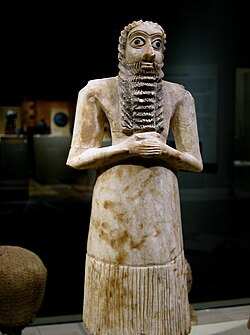
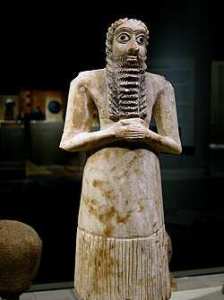
Image credit: “Complaint tablet to Ea-Nasir 2020.jpg” by Zunkir, Wikimedia Commons, licensed under CC BY-SA 4.0. The additional Sumerian statuette image was supplied by Iraq Adventure.
 Iraq Adventure
Leave a comment