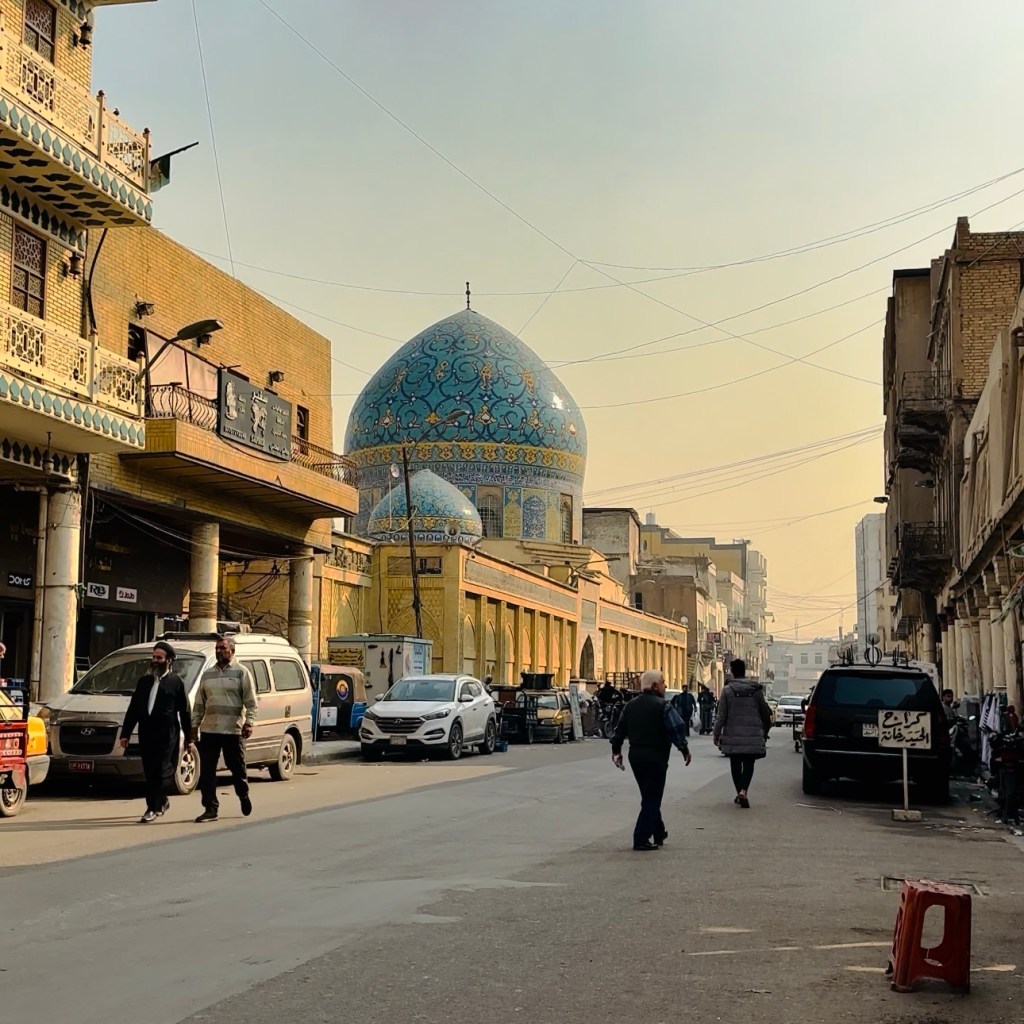
In Baghdad
Baghdad the city of peace🕊️
is the capital of Iraq and the second-largest city in the Arab world. It’s located on the Tigris river & during the Golden Age, Baghdad considered the largest city in the world at more than one million people.
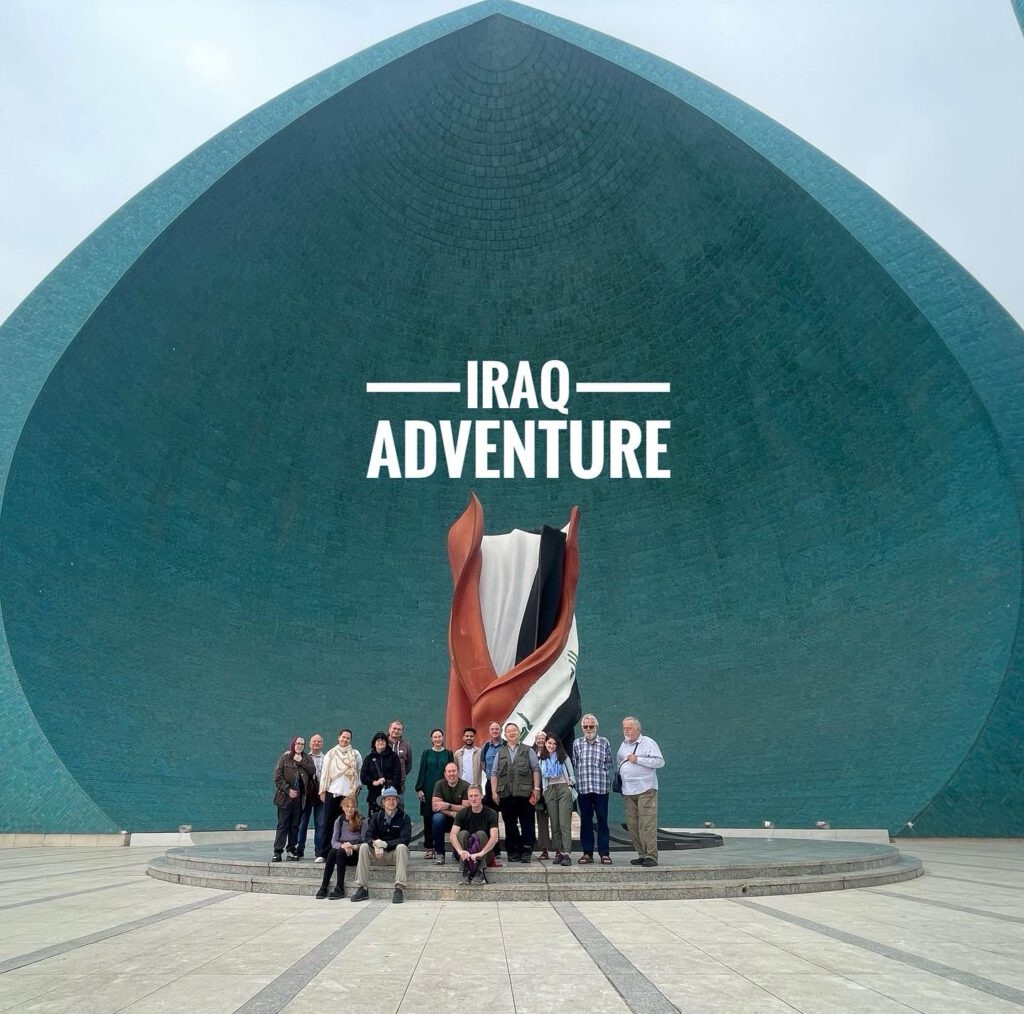
1-Martyr’s Monument
Al-Shaheed Monument also known as the Martyr’s Memorial is a monument designed by Iraqi Sculptor Ismail Fatah Al-Turk, located in Iraq capital, Baghdad.
The monument dedicated to the Iraqi soldiers who died in Iran-Iraq War. The two halves of the split turquoise dome are offset with an eternal flame in the middle.
It is one of the most iconic monuments in Iraq.
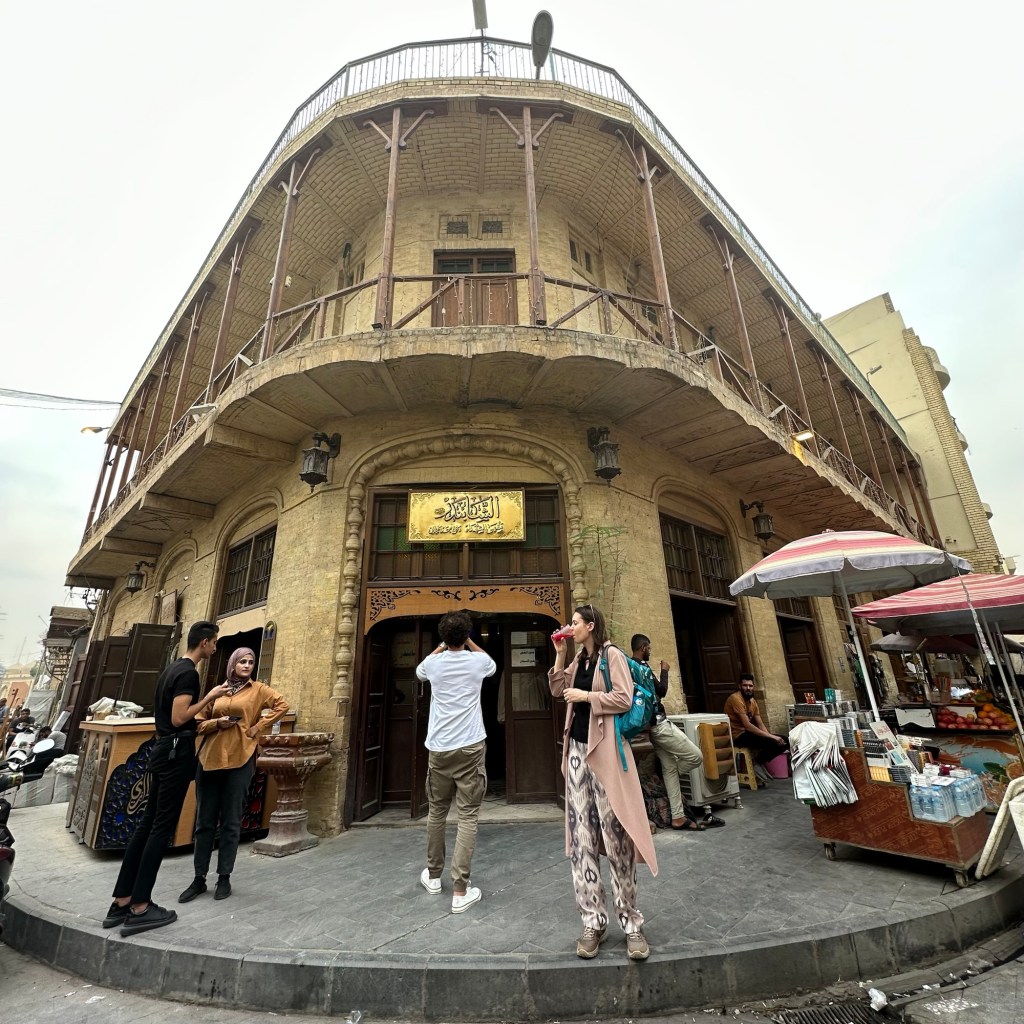
2-The Shabandar Cafe
Shabandar Cafe that had been a place for writers since the 8th century – is named after a Baghdadi family known for their wealth, prestige, and their work in the field of trade and politics and got and the Shabandar Café was a victim to a car explosion from a car situated on al-Mutanabbi Street which killed more than a 100 people. As a result of the horrific incedent, the place was completely destroyed along with its library. In this incident, four of owners sons and a grandson were killed and found among the rubble and under the rubble. This accident also lead their mother to lose her sight, then died several months later. At the time, al-Khashali the owner was thought to also been killed but was on a break , al-Khashali was heartbroken and had to control his anger. He made it his goal to rebuild the café again and to preserve its cultural features and its old identity
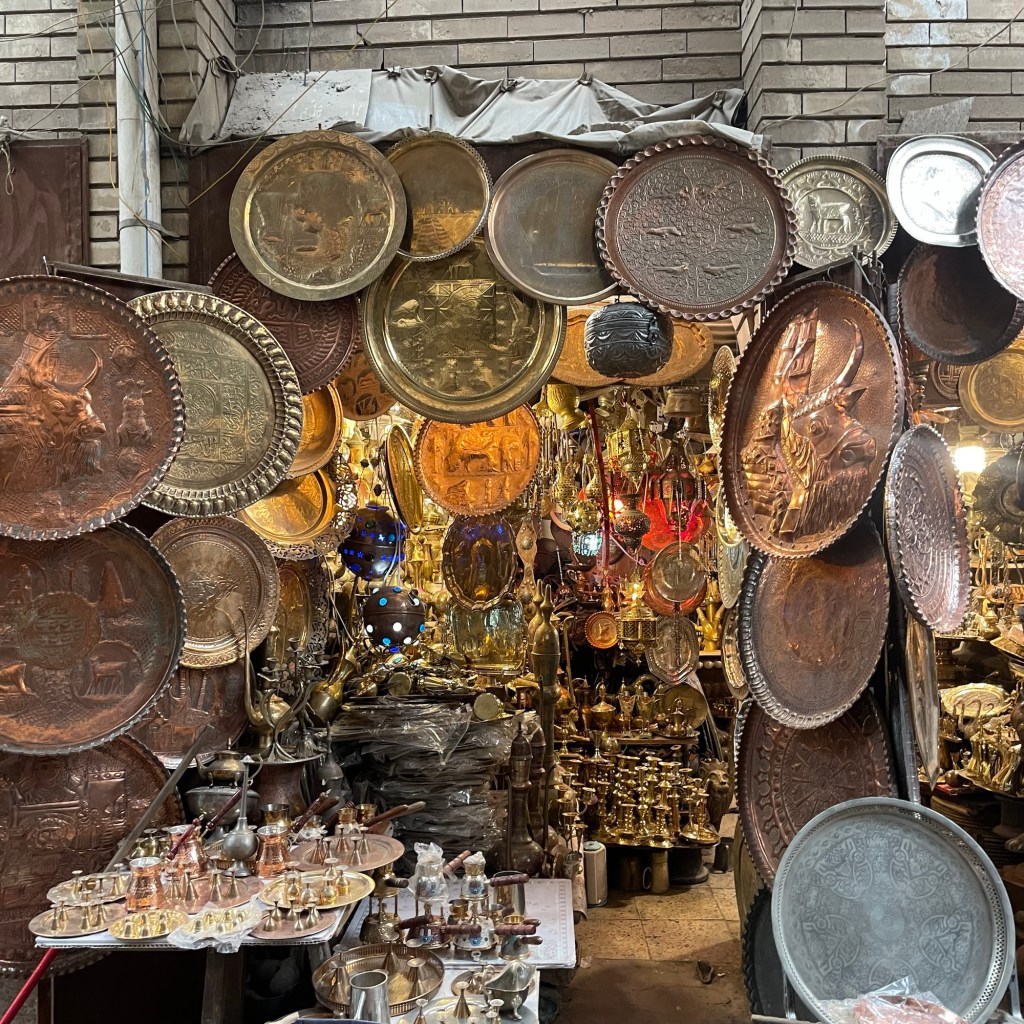
3- Copper Market
Ancient bazaar in Baghdad, Iraq, that branches off al-Rasheed Street and . It was established in Central Baghdad on the shores of the Tigris River in the Abbasid period 9th century and has been active ever since. Traditionally, the craftsmen are specialized in making handmade copperwork for household or traditional uses using hammers and hand tools.
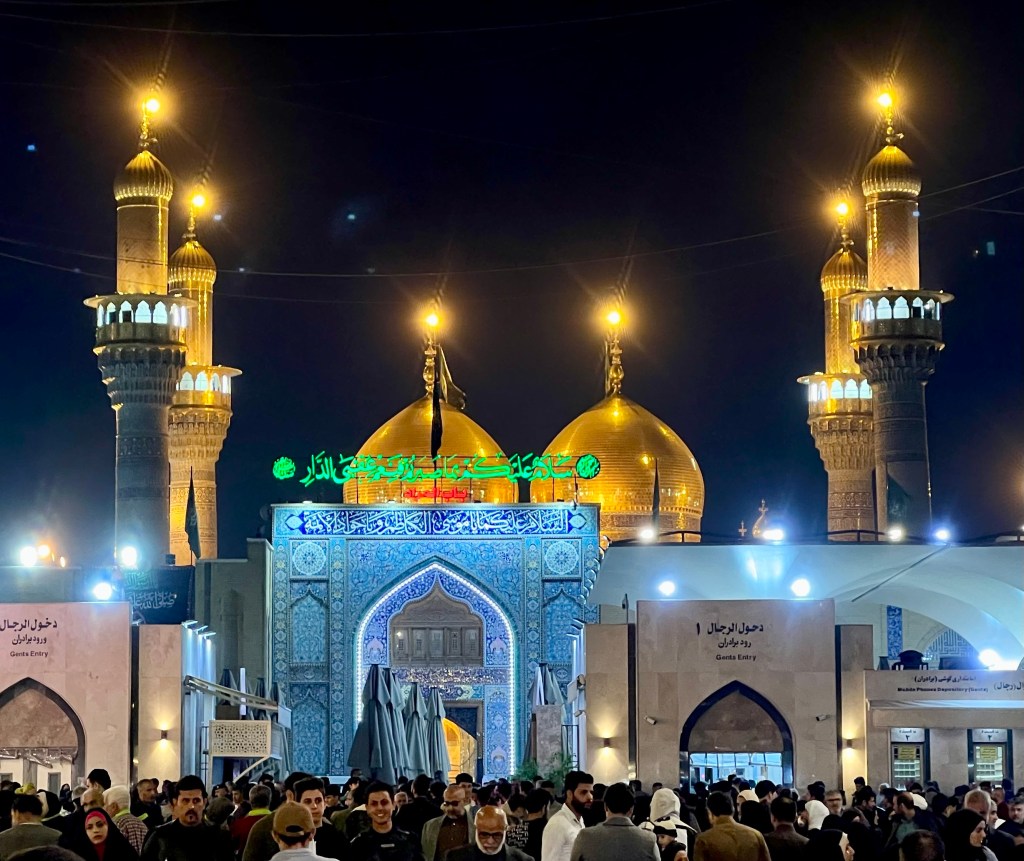
4- kadhimiya Shrine
is a Shia Islamic mosque and shrine located in the Kādhimayn suburb of Baghdad, Iraq. It contains the tombs of the seventh and ninth Twelver Shia Imams,
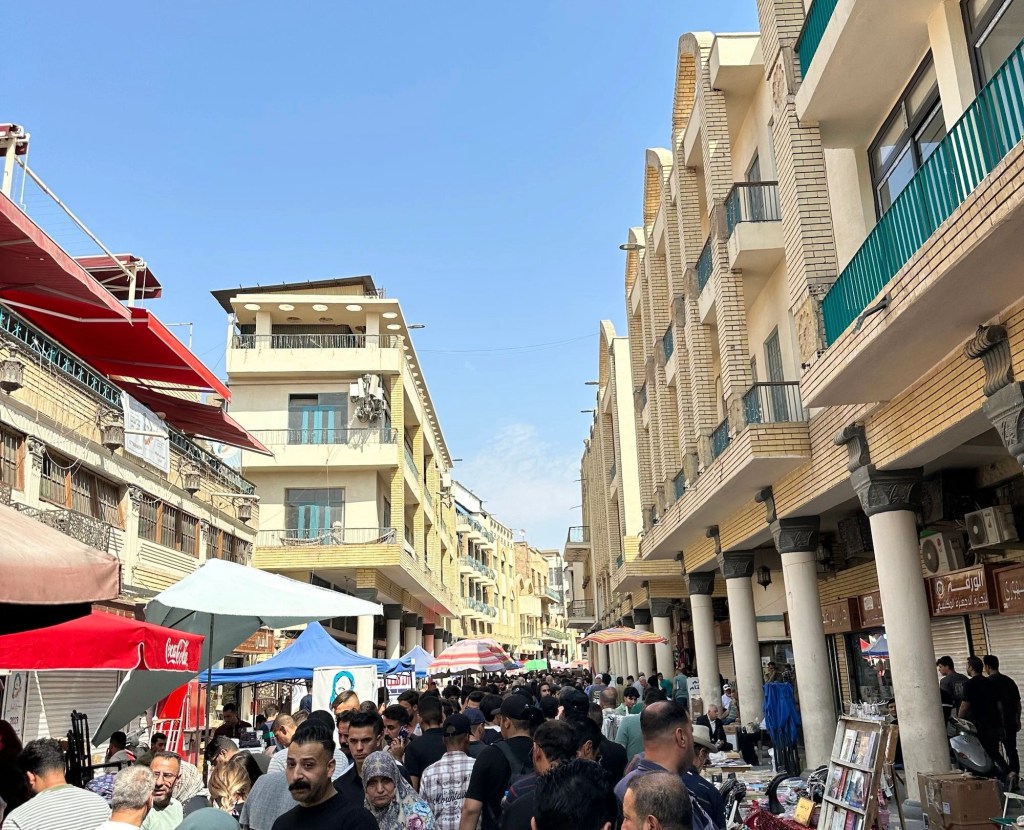
5- Al-Mutanabi Street
Al-Mutanabbi Street is considered the most famous street in all of Iraq due to its ancient history and community. The Street is full of bookstores and crowded from the early hours of the morning until late at night with visitors including poets, writers, artists and students as well as tourists from all over the world.
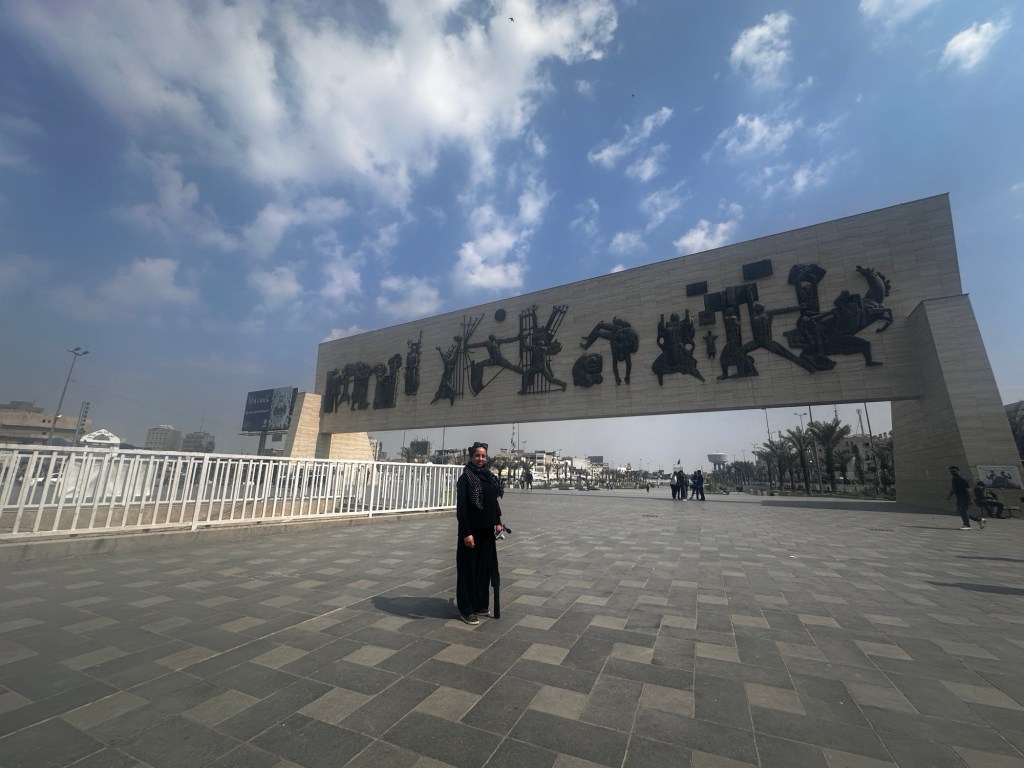
6- libration Square
Tahrir Square is biggest and most central square in Baghdad located on the eastern banks of the Tigris river.
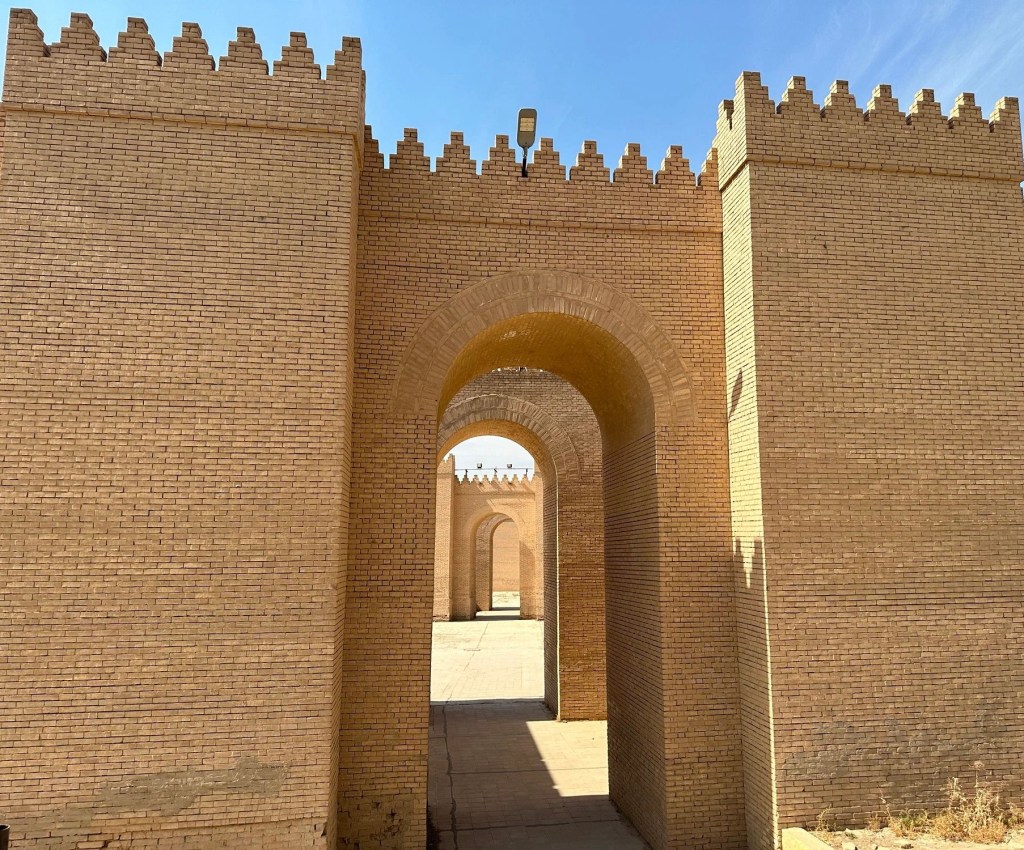
In Babylon
The Ancient City of Babylon currently Iraq was a metropolis and main Kingdom in the Mesopotamia region and the largest city at some point reaching 200,000 people. Originally built as a small town in 2300 BC, Babylon was a powerful city-state between 18th-6th century BC. In the picture,
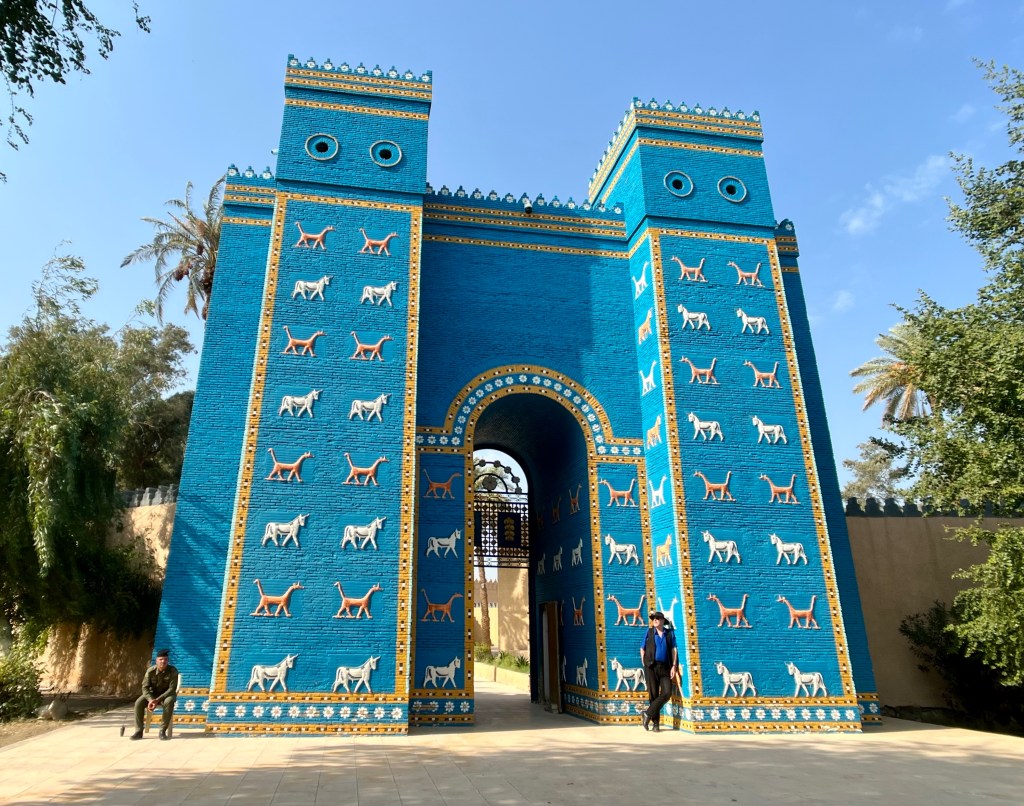
1-Ishtar Gate
I am standing in front of the entrance to Babylon, the Ishtar Gate. Ishtar is the Babylonian goddess of fertility, love, and war.
One of the Seven Wonders of the Ancient World is believed to have been here, The Hanging Gardens of Babylon. The Gardens of Babylon were built for Queen Amytis by her Neo-Babylonian King Husband because she missed the rolling green hills of her homeland another significant event was the death of Alexander the Great. Alexander was the King of the Macedon empire.
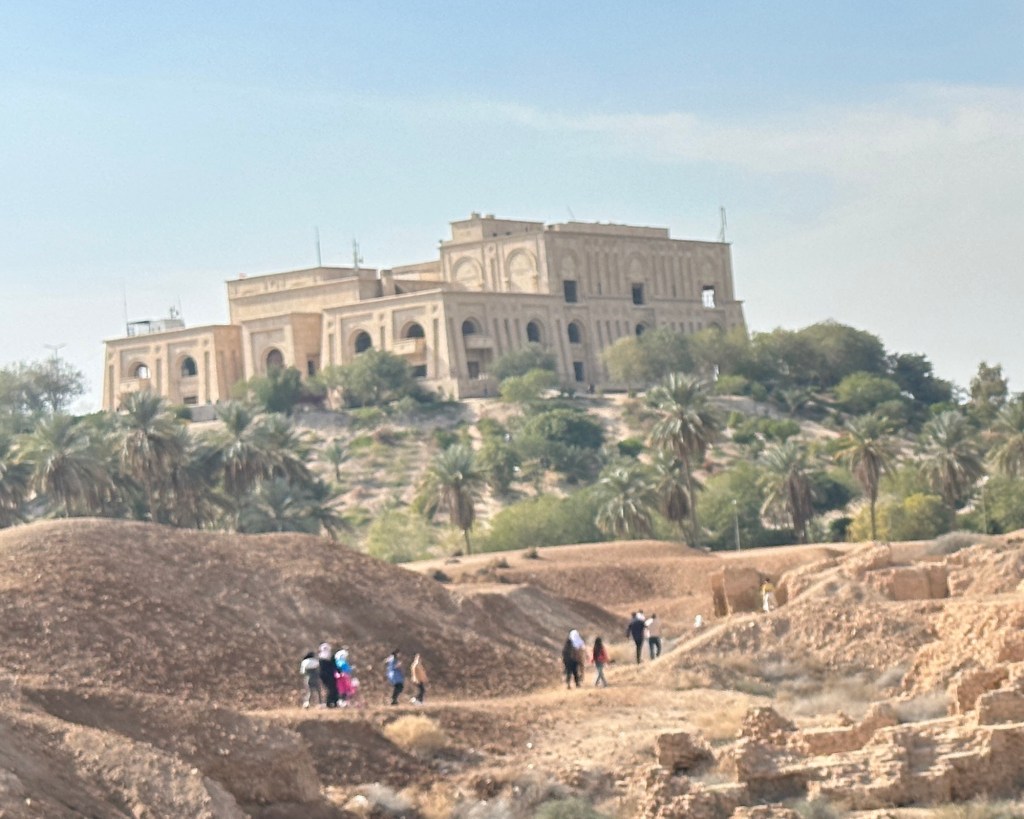
2- Saddam Hussains Palace
Walking through the abandoned palace of Saddam Hussein… It’s build on a hill overlooking Babylon
When President Bush ordered U.S. forces to invade Iraq in 2003, they occupied Babylon and turned Saddam’s castle into their command center. Their graffiti remains on the walls
The hill itself isn’t natural by the way. In 1986, Saddam’s workers blasted away a village and built an artificial hill in its place.
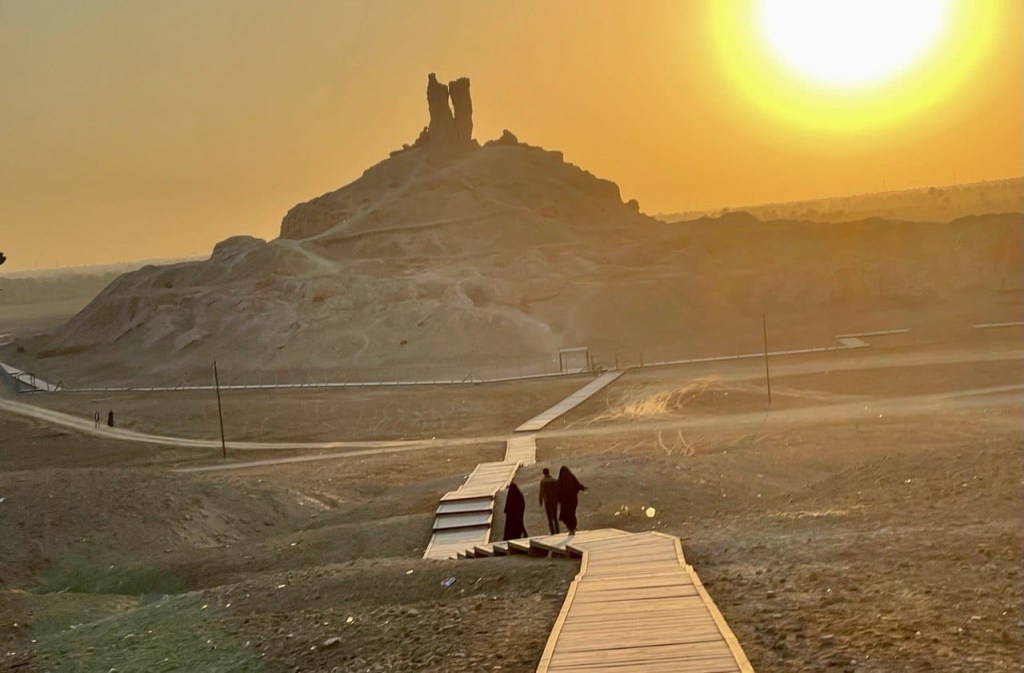
3- Borsippa ziggurat
identified in the later Arabic culture with the Tower of Babel due to Nebuchadnezzar referring to it as the Tower of Borsippa or tongue tower, as stated in the stele recovered on site in the 19th century. However, modern scholarship concludes that the Babylonian builders of the Ziggurat in reality erected it as a religious edifice in honour of the local god Nabu, called the “son” of Babylon’s Marduk, as would be appropriate for Babylon’s lesser sister-city.
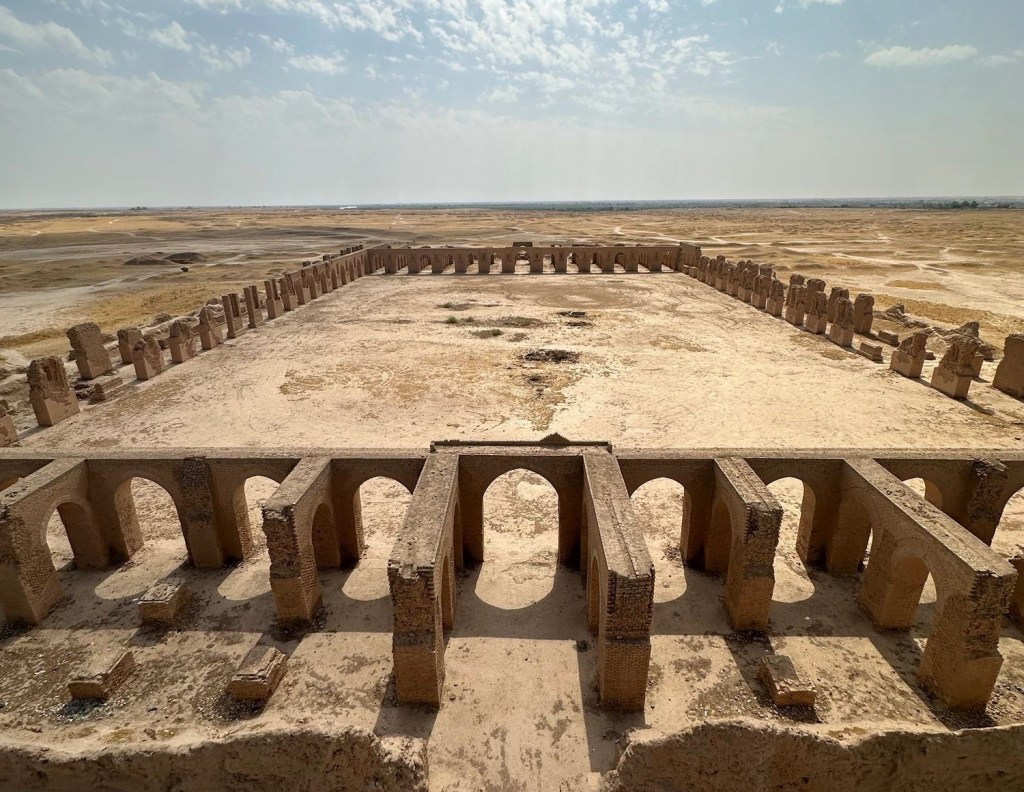
Samara
The City located to the north of Baghdad approximately 140KM away and got established On 836 AD , as a capital for the Abbasid dynasty’

1- Great Mosque of Samarra
The Great Mosque of Samarra was the world’s largest mosque when it was built and dates back to the 9th century located in Samarra, Iraq. The mosque was completed in 851 by the Abbasid caliph Al-Mutawakkil. At the time of construction,. It is known for its 52-meter (171 ft) high minaret encircled by a spiral ramp, the Malwiya Tower. The mosque is Archaeological City UNESCO World Heritage Site, listed in 2007. The structure is composed of a large rectangle of almost 38,000 square meters with the 3:2 proportions typical of many mosques.
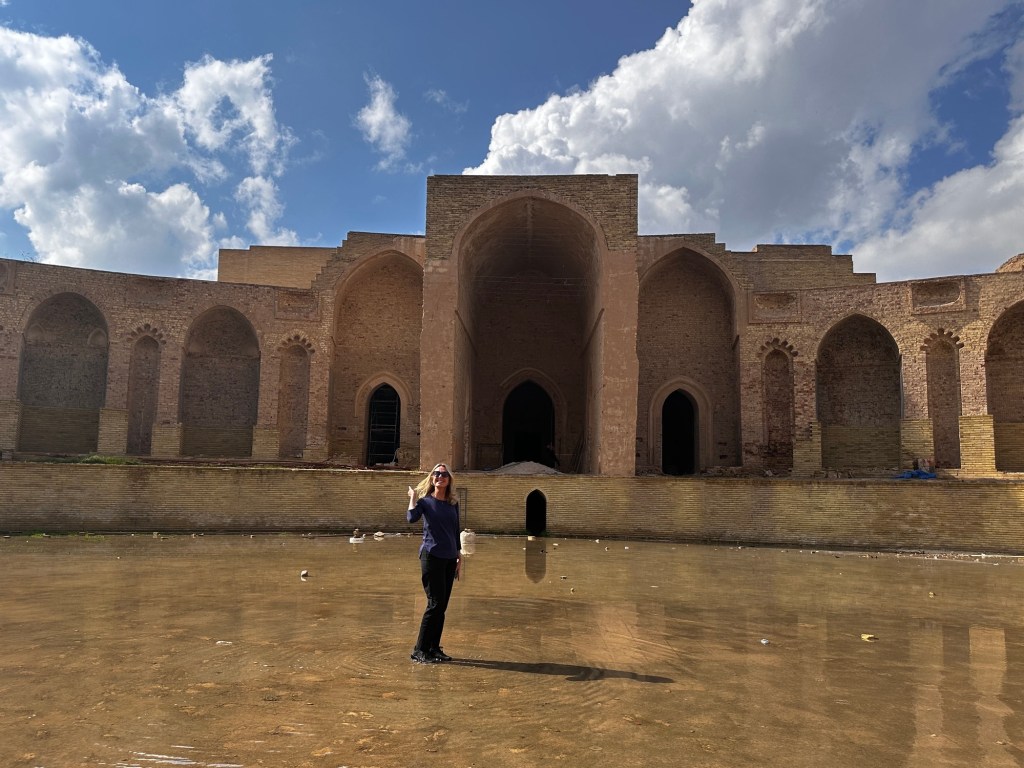
2- The Barka Palace
The virgin palace is one of the historical palaces located in Samarra, the center of Salah Al-Din Governorate in central Iraq. The Caliph Al-Mutawakkil built it in to be a palace in 9th century.
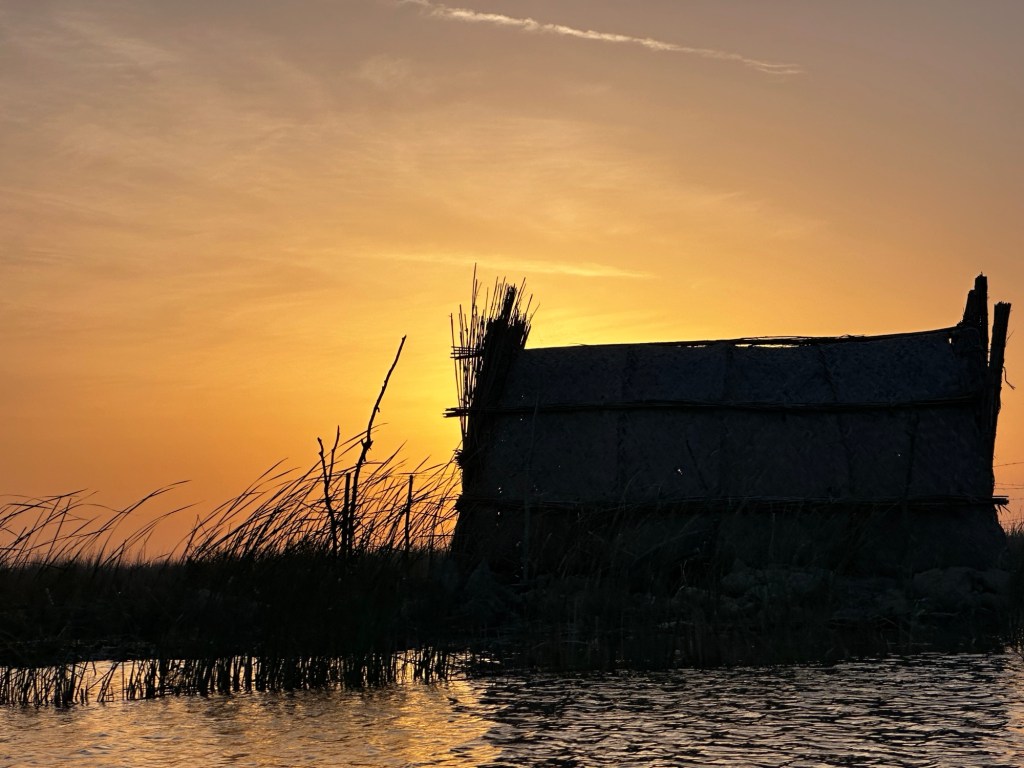
In Al-Nasryiah
Located south of Baghdad, near the ruins of the ancient city of UR and got a population of 350 thousand people living in it.
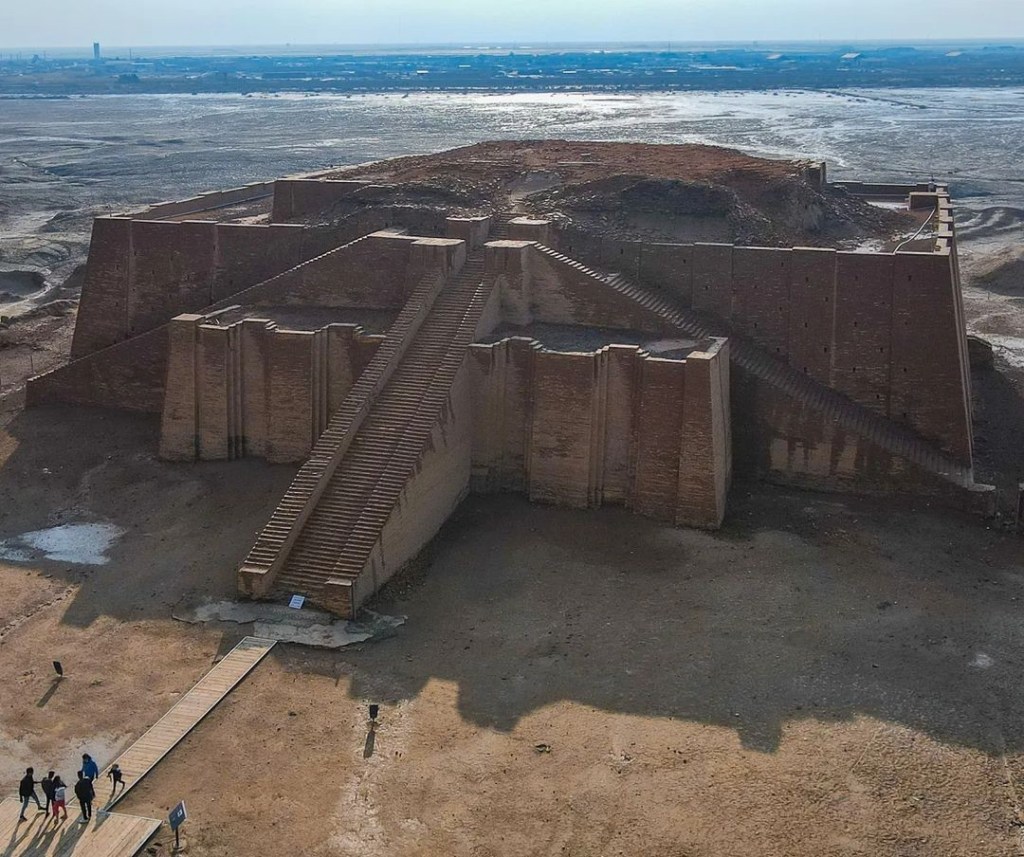
1- The Ziggurat of Ur
The Ziggurat of Ur, a massive stepped temple tower, was one of the most prominent structures in the city.The Neo-Sumerian ziggurat was built by King Ur-Nammu during the Early Bronze Age (2100 BCE). It served as a religious center dedicated to the moon god Nanna, attracting pilgrims and worshippers from far and wide. Ur was excavated by archaeologist Leonard Woolley. In the 1920s and 1930s, British archaeologist Leonard Woolley led a series of excavations at Ur. His discoveries shed light on the rich history and culture of this ancient city, unearthing intricate artifacts, royal tombs, and evidence of advanced urban planning.
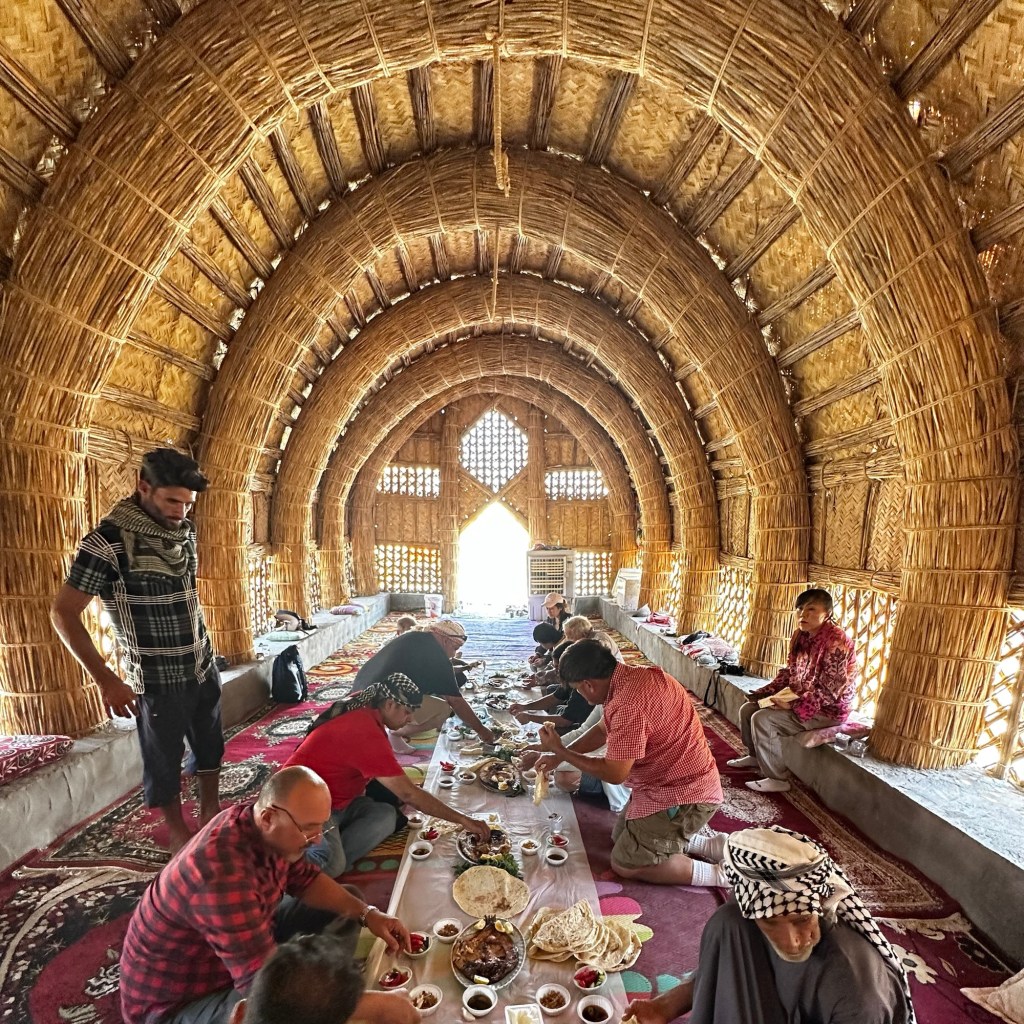
2- Mesopotamian Marshes
Nestled in the flood plains between the Tigris and Euphrates rivers, the Mesopotamian Marshes of Iraq are the largest wetlands in the Middle East. They not only provide a habitat to hundreds of bird and fish species, but they are also home to thousands of Marsh Arabs who are returning more and more to their historical heartland. Many historians are of the belief that these marshlands were once the biblical Garden of Eden. What we do know for sure is that the area cradled some of the earliest civilizations and the first written languages. With swaying reeds, water buffalo, and rare waterfowl, this magical corner of the earth has also witnessed centuries of human turmoil and religious strife. The biggest impact on the marshes of Iraq has been from Saddam Hussein’s regime. The Marsh Arabs, who at their height numbered about half a million, have now dwindled to as few as 20,000 in Iraq. Only 1,600 of them were estimated to still be living in traditional villages by 2003.
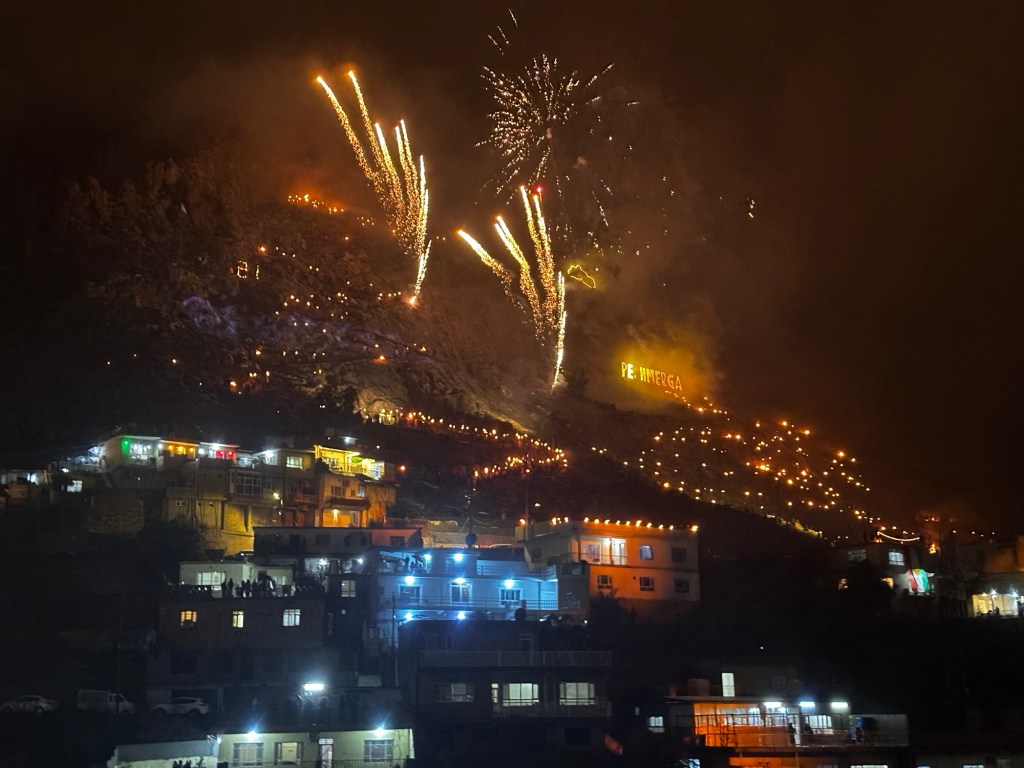
Akra
Nowruz is the Kurdish New Year & marks the beginning of spring celebrated by various ethnic groups worldwide dating back to 2000 years ago. It marks the first day of the new year around 21 March. People in Iraqi Kurdistan gather up and head to the mountains handling torches dancing & wearing traditional costumes .
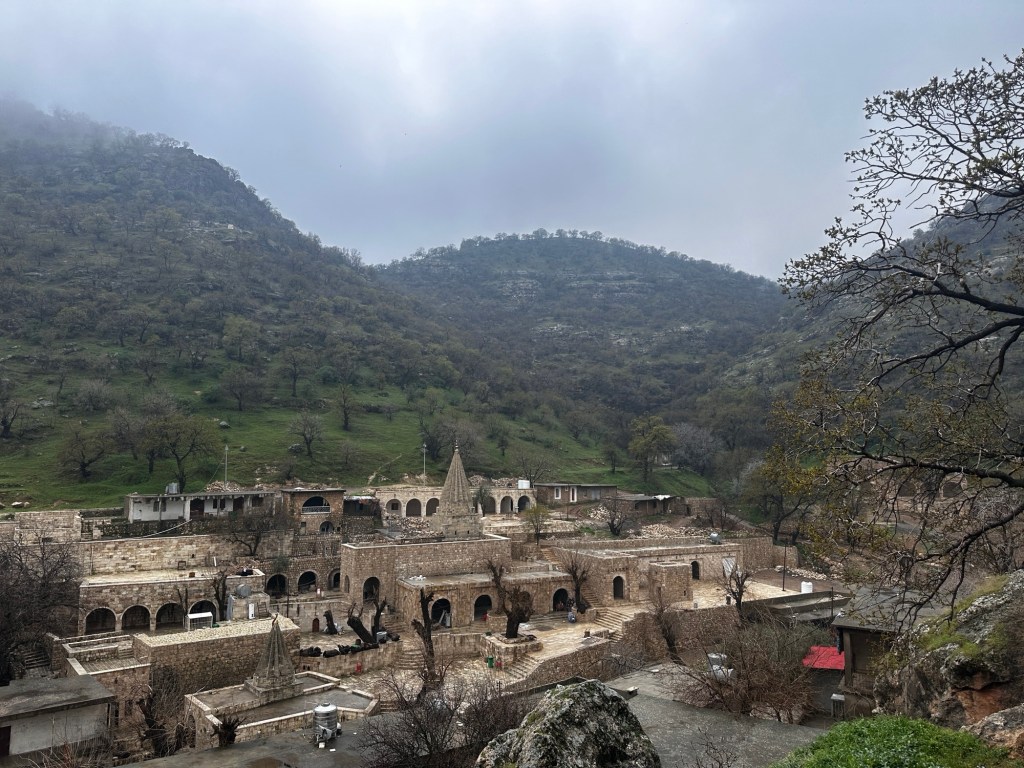
Lalish
Lalish is a mountain valley and temple in Shekhan in Iraq. It is the holiest temple of the Yazidis dates back about 4000 years ago. Through their history, the Yazidi people have endured much systematic violence as they upheld their religion . Yazidism is a monotheistic faith based on belief in one God, who created the world and entrusted it into the care of a Heptad of seven Holy Beings, often known as Angels (the Seven Mysteries). Preeminent among these is Tawûsê Melek (also known as “Melek Taûs”), the Peacock Angel.
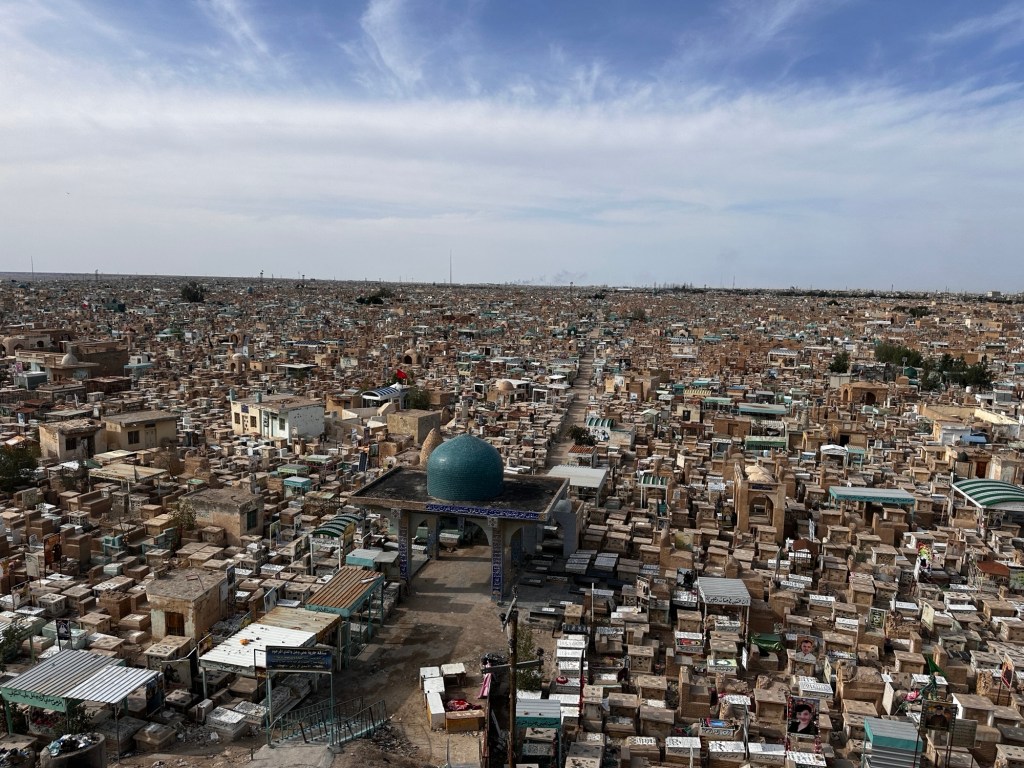
largest cemetery in the world
Valley of Peace is the largest cemetery in the world. The cemetery is located in Najaf, Iraq. Daily burials have been on going for over 1,400 years and the site is on the Tentative List of UNESCO’s World Heritage sites..
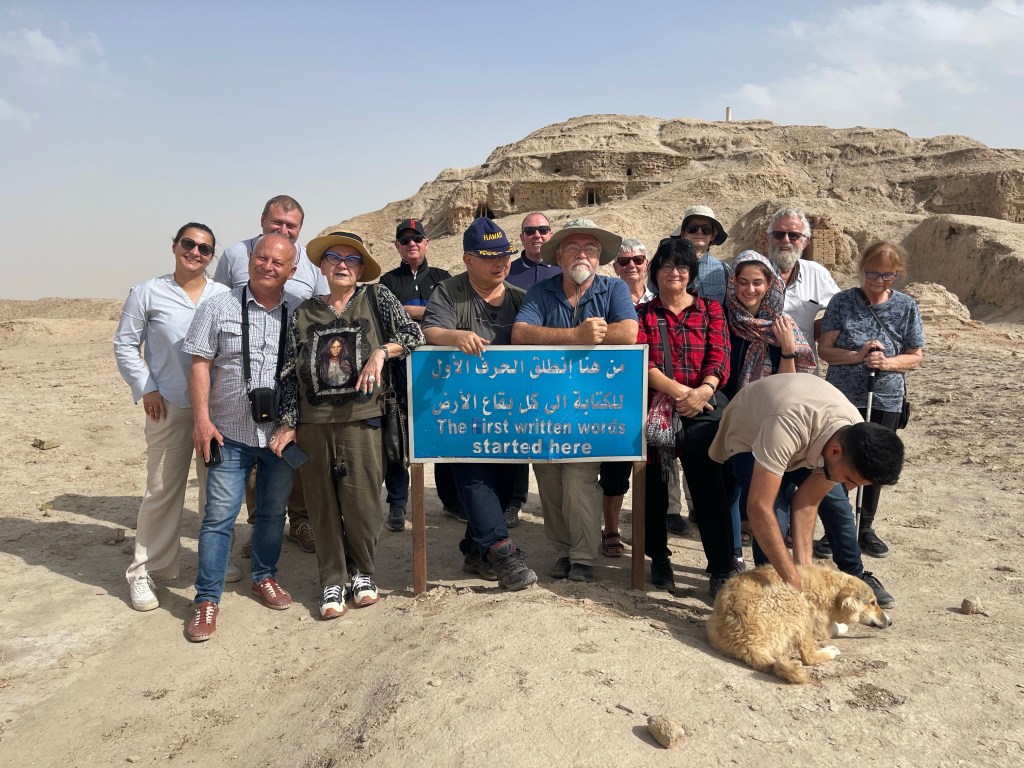
URUK
Uruk was the first major city in Sumer built in the 5th century 5400 BC, and is considered one of the largest Sumerian settlements and most important religious centers in Mesopotamia. It was continuously inhabited from about 5000 BC up to the 5th century AD and considered to be first urban city and where the cunifurm was invinted.
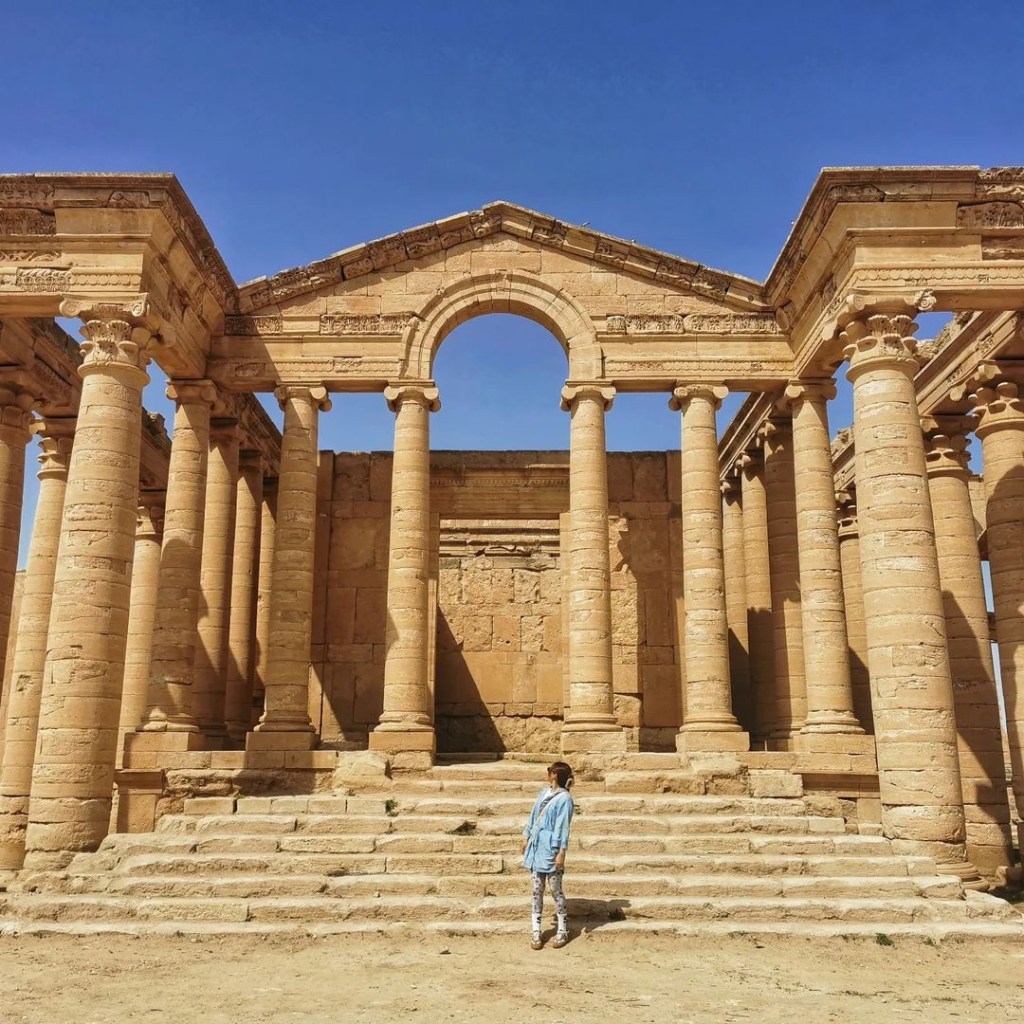
Hatra
Hatra was an ancient city in Upper Mesopotamia located in present-day eastern Nineveh Governorate in northern Iraq. The city lies 290 km northwest of Baghdad and 110 km southwest of Mosul.
Hatra was the city of the Sun God. It was an important Arab sanctuary and a major city of the Jazirah in northern Iraq at the crossroads of major trade routes between the Roman and the Parthian Empires. Its extraordinarily well-preserved temples and city walls date from the second and third centuries A.D. Besieged without success by the Roman emperors Trajan and Septimius Severus, and eventually captured by the Sassanians, it was abandoned around A.D. 240.nHatra is currently under UNESCO protection due to the attacks it has endured in recent years.
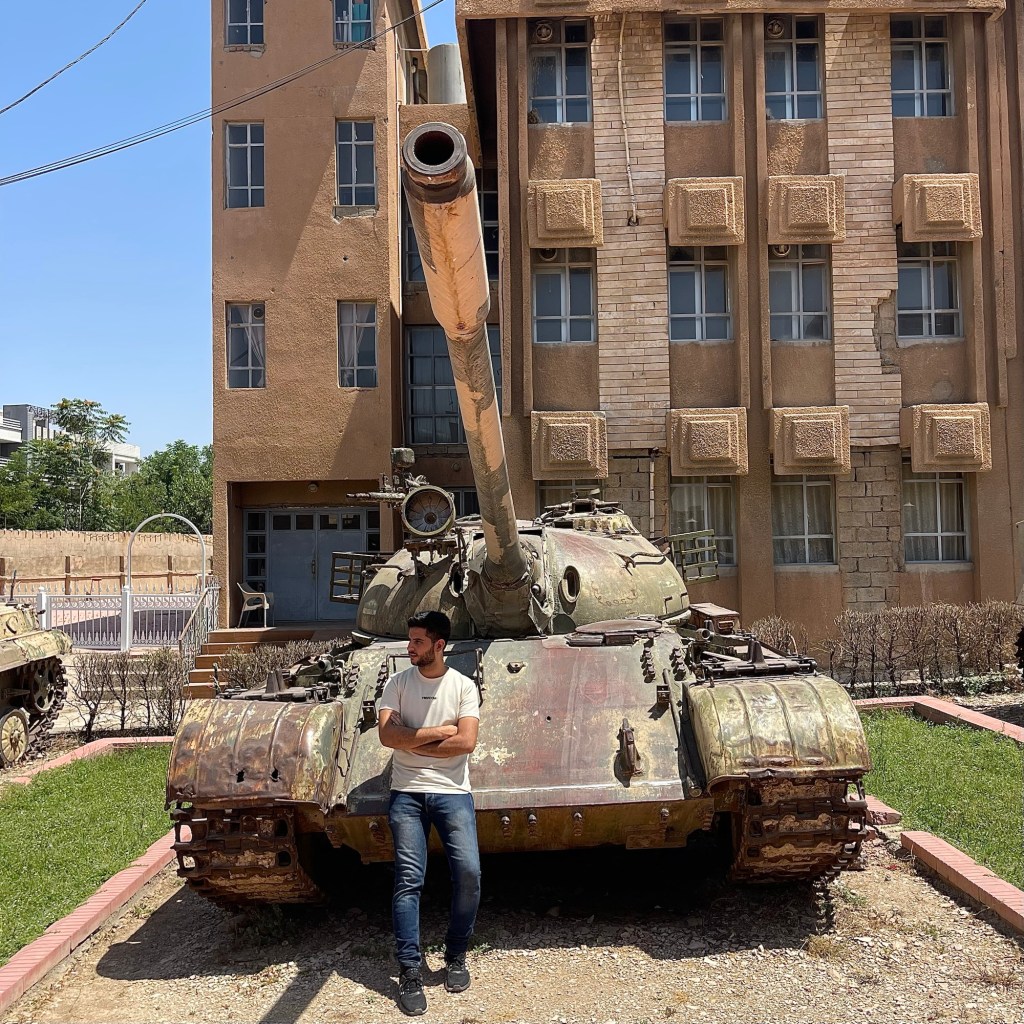
Amna Suraka
Also known as the Red Prison or the Red Security prison, is a former infamous internal security building in Sulaymaniyah, Iraqi Kurdistan. It was used as a detention center during Saddam Hussein rule in Iraq .
Thousands were detained in Amna Suraka during its years of operation. Many of the detainees were subjected to various forms of abuse physically.
In 1991, after the Kurdish uprising, the building was captured by Kurdish forces, and it was turned into a museum to document the atrocities committed under Saddam Hussein’s regime.
 IRAQ ADVENTURE