Day 1 The road to Duhok
Destinations:
Duhok, Erbil
Itinerary:
We begin the day nice and early at 8:00 AM for a two hour drive to…
- Mar Mattai Monastery:
Built in 4th century, it is recognized as one of the oldest Christian monasteries in Iraqi Kurdistan. From the monastery, we will be able to see far into the distance. Not so long ago, we could gaze into ISIS territory. - Jerwana Aqueduct:
The aqueduct is part of the larger Atrush Canal built by the Assyrian king “Senacherib” between 703 and 690 BC, to water Ninevah’s extensive gardens. The aqueduct is considered to be the world’s oldest aqueduct, pre-dating anything the Romans built by five centuries. - Khinnis Reliefs:
An Assyrian archaeological site during the reign of “Sennacherib” (705–681 BC). Khinnis was built in order to “celebrate the construction of a complex system of canals” whose aim was to supply the capital of the empire, Nineveh. - Lalish:
This is the most sacred town for the Yazidi people, and is extremely interesting. Everyone is required to remove their shoes when inside of the holy city of Lalish.
Accommodation:
Khani Hotel or Sofia Hotel
Duhok
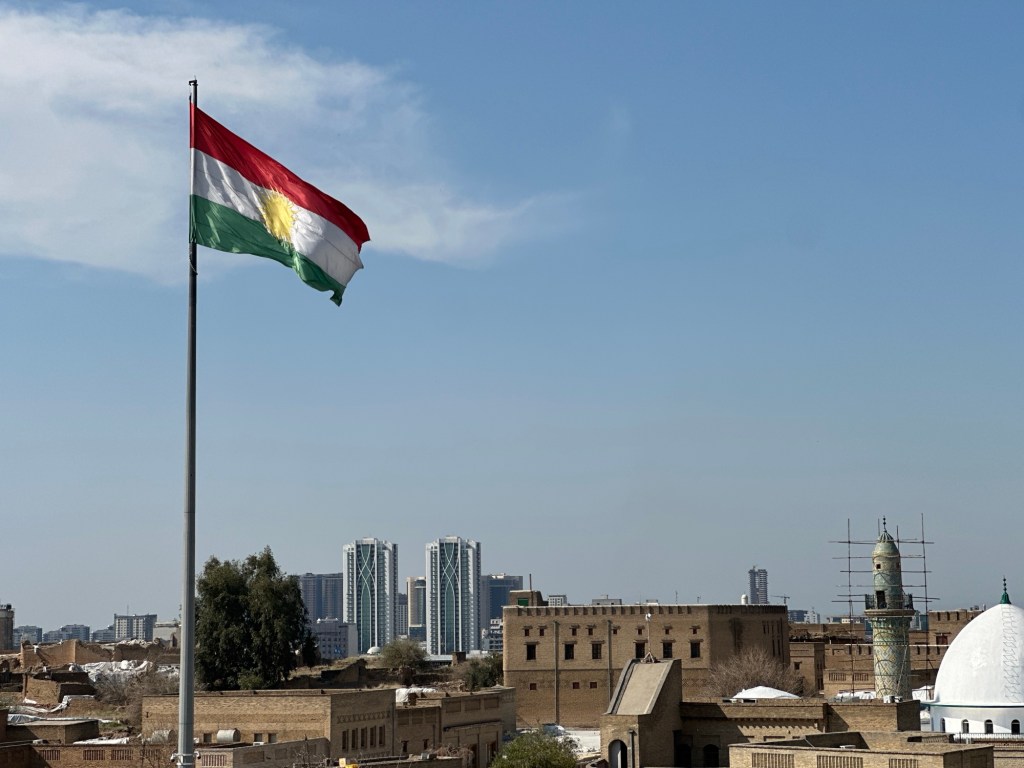
Day2 The road to Saddam’s ruined palaces
Destinations:
Amedi, Duhok
Itinerary:
In the morning we head to Amedi city, also known as “the City in the Sky”.
- Amedi:
Here we will see the old mosque, an ancient gate built in the 2nd century BC, and a lovely view point of the town from above. In addition, we’ll visit the Madrasa old ruined school. - Saddam’s ruined former palace:
After Amedi, we will visit the ruins of Saddam’s former palace, which is truly an amazing site. We won’t be able to go inside, but we’ll have excellent views from outside and below. - Duhok shopping:
If times permits, we can visit the bazaar of Duhok, and some interesting tea houses, including Shahed Café, also known as “Martyrs Café”.
Day3 The road to Syrian and Turkish borders
Destinations:
Akre, Duhok, Rawanduz
Itinerary:
Highlights for today include…
- Syrian border:
Here we’ll visit Saint George church, a 3rd century AD church that is built on the cliffside of the Tigris River. From here, we’ll be able to see a Syrian village, and where the Tigris flows into Iraq. - Turkish border:
Next, we’ll drive along the Turkish & Iraqi border to visit the Dalal Bridge, which is known as “Roman bridge” located in the town of Zakho. - Alqosh:
Our next stop is at the Christian church of Saint Hormizd, built tucked away in the mountains near Alqosh. Monks used to hide in caves here. - Akre:
Our penultimate stop for the day is a visit to the Muslim Sufi shrine in Akre, home to a large community of Dervishes.
Day4 The road to the famous Hamilton Road
Destinations:
Rawanduz
Itinerary:
Today we will explore the famous Hamilton Road!
- Hamilton Road:
Widely regarded as one of the greatest engineering feats of the 20th Century, the road was engineered by New Zealand-born Archibald Hamilton between 1928 and 1932. The road snakes through incredible scenery, from gorges, canyons, rivers, and mountains. Along the way, we’ll make stops at:- Gali Ali Bag Waterfall
- “Old” Hamilton Road
- Rawanduz Canyon
- Korek Mountain (cable car)
- Bekhal Waterfall
- Shanadar Cave
DAY 5The road to Sulaymaniyah
Destinations:
Rawanduz, Sulaymaniyah
Itinerary:
We begin the day nice and early at 8:00 AM for the 3.5-hour drive to visit Sulaymaniya.
- Red Prison:
The Red Prison was an infamous building where Saddam’s goons imprisoned thousands of Kurd civilians, exposing them to the worst forms of torture. It has been turned into a nice museum, complete with exhibits about the other strifes of the Kurdish people, as well as an exhibit about the war on ISIS. - Sulaymaniyah Market:
You’ll get plenty of free time to shop and explore a wide variety of unique market vendors, and delicious street food. - Goyja Mountain:
We’ll finally make our way to Goyja Mountain to take in unforgettable and amazing views overlooking Sulaymaniyah at night.
DAY 6The road to the Iranian border
In the morning, it’ll take approximately 1-hour to drive to Halabja.
- Halabja:
Halabja was the scene of the mass chemical attack on the Kurdish people, perpetrated by the Baathist regime. Here, we will visit the monument of Halabja, and a mass grave cemetery. - Byara Village:
We’ll then head to Byara Village, the last village in Iraqi Kurdistan next to the Iranian border, and previously the front-line in the Iran/Iraq war. At this point, we’ll be standing just a few meters away from Iran!
DAY 7The road back to Erbil
For the morning, we’ll stay in Sulaymaniyah and make one stop before heading back toward Erbil.
- Civilians’ Museum:
Filled with historical objects from the area, and from various time periods – from Sumerian/Assyrian to the modern era. - Rock-Cut Tombs of Qizqapan:
Carved into the side of a cliff, it is a tomb built by Medes. - Koya Caravansary:
The old market and old ruined caravansary. The market in Koya has been left in its natural, pure state. Some of the doors and gateways date back to the 13th century, and upon the stupendously undiluted central caravansary, you are in for a real treat. - Qishla Castle:
Perhaps the most attractive site among Koya’s numerous historical and archaeological sites.
DAY 8Exploring Erbil
Today we’ll focus purely on Erbil, visiting some of the top sights, such as…
- Erbil Citadel:
Discover the ancient Erbil Citadel, a UNESCO World Heritage site offering panoramic views and a journey through 7,000 years of history. - Jalil Khayat Mosque:
Marvel at the Jalil Khayat Mosque, an architectural masterpiece with intricate designs and a serene atmosphere. - Qaysari Bazaar:
Immerse yourself in the vibrant Erbil Market, where traditional crafts, spices, and local delicacies await. - Minara Park:
Stroll through Minara Park to admire the historic Mudhafaria and Choli Minarets amid lush greenery. - The Jewish Neighborhood:
Explore Erbil’s Jewish neighborhood, a testament to the city’s diverse and storied past.
 IRAQ ADVENTURE